Telehealth Startup Viability in Serbia and the Balkans

Serbia is a promising (and slightly paradoxical) place to build telehealth: digital health is expanding fast, but prescription medicines are tightly regulated and direct-to-consumer pharma advertising has sharp limits. This post maps what’s legal today—and how to launch a medication-access + adherence platform that stays squeaky-clean on compliance.
You’re building in a regulatory maze where the walls move slowly, but they do move. The trick is to design a business that works now (Phase 1), grows with the rules (Phase 2), and becomes fully integrated once policy catches up (Phase 3).
This article is written for healthtech founders in Serbia (especially urban, primary-care focused) who want to partner with licensed providers and potentially a large pharmacy chain—without stepping into “online pharmacy” territory that Serbia doesn’t currently welcome.
Disclaimer: This is general information, not legal advice. For anything that touches prescribing, dispensing, advertising approvals, or personal data protection, get local counsel.
Table of contents:
- Reality check: what’s clearly allowed vs. risky
- Serbia’s current framework: telehealth, e-prescriptions, pharmacies, and advertising
- Compliant business models (telehealth + pharmacy) that work under restrictions
- Go-to-market roadmap for an urban primary-care platform
- How regulation typically evolves (and what to watch in Serbia)
- Phased service architecture: product, revenue, partnerships, and compliance stack
Reality check: what’s clearly allowed vs. risky
Serbia is not a “do whatever you want online” market for prescription medication. The safest mindset is: your platform can support care and logistics—but licensed professionals and pharmacies must do the medical and dispensing acts.
- Clearly allowed (with licensing + standards): teleconsultations by licensed physicians operating under general healthcare rules 1.
- Likely allowed (with careful implementation): digital medication adherence programs (reminders, education, follow-ups), pharmacovigilance-style safety check-ins, and care navigation.
- Regulated and sensitive: anything that looks like “selling” prescription medicines online, or creating consumer-facing promotion that triggers pharma advertising controls 6.
- High-risk zone: “online pharmacy” flows for Rx meds and courier-style delivery of medicines. Public reporting quotes Ministry of Health positions that online sale and courier delivery are prohibited 5.
The founder move in regulated markets isn’t “how do we bypass the rules?” It’s “how do we build something useful that the rules already allow—and become the obvious partner when the rules expand?”
Serbia’s current framework: telehealth, e-prescriptions, pharmacies, and advertising
1) Telehealth / telemedicine
A key nuance: reputable legal overviews note that telemedicine is not specifically regulated as a standalone regime in Serbia, so the general healthcare framework applies (licensing, standard of care, consent, recordkeeping, professional liability) 1.
Meanwhile, the state has explicitly run telemedicine pilots and digitalization programs—signals that policy is moving, even if slowly 23.
2) E-prescriptions and digital health infrastructure
Serbia has been expanding national eHealth infrastructure and electronic documentation. A major pillar is the legal framework for health documentation and the “e-karton” concept (electronic medical record) 8.
Practical integration matters: reporting in late 2025 indicated the direction of travel toward broader e-prescription usability, including private healthcare integration from 1 January 2026 (per local legal news coverage) 4.
3) Pharmacy operations: who can dispense medicines
Pharmacy activity is treated as part of the regulated healthcare system. Commentary that maps Serbia’s rules emphasizes that dispensing is performed through recognized pharmacy forms (institutions or private practice), and establishment/operation depends on meeting staffing, premises, and inspection requirements 9.
4) Advertising and promotion: why “marketing Rx drugs online” is a trap
ALIMS treats advertising broadly, explicitly including internet promotion, and requires promotional materials to align with rules and approval processes 6. This is a major reason to design your go-to-market messaging around services (care access, adherence support), not “buy Drug X.”
5) Data protection: health data is the boss fight
Serbia’s data protection law is aligned with GDPR-style concepts and applies to automated processing 7. Combine that with health documentation rules and you get a clear product requirement: consent flows, access control, audit logs, retention rules, and security-by-design aren’t “nice to have”—they’re the product.
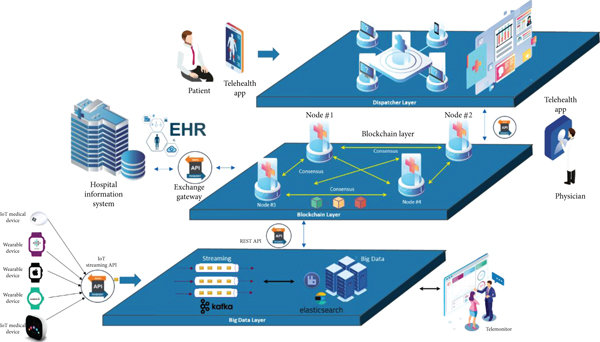
Compliant business models (telehealth + pharmacy) that work under restrictions
The most defensible model in Serbia today is: you don’t sell medicines. You enable care and help a licensed pharmacy do what it already may do—within the existing rules.
Model A — “Care + adherence” platform (no dispensing)
- Teleconsultation booking and video/phone visits with licensed physicians/clinics.
- Post-visit adherence bundle: reminders, side-effect check-ins, refill nudges, education, and escalation to a clinician.
- Revenue: subscription (B2C) for adherence + navigation, or employer/insurer packages (B2B2C).
Model B — “Prescription routing” (fulfillment without selling)
Here’s the key trick: facilitate the workflow, but let the pharmacy do dispensing and payment. Patients choose a partner pharmacy (or pharmacy chain) and receive:
- Pick-up instructions (“click & collect” concept, where legally acceptable).
- Status updates (“ready for pickup”, “backorder”, “substitution options”), generated by the pharmacy side.
- Revenue: pharmacy pays SaaS / per-order workflow fee; optional patient subscription for adherence features.
Model C — “Pharmacy chain partnership” (the big-league version)
If you partner with a large chain, you can structure this as:
- White-label adherence and patient communication layer for the chain (you are a tech vendor).
- Co-branded care navigation that routes patients to the chain’s physical locations.
- Clinical programs (e.g., hypertension or diabetes adherence) delivered through physicians + pharmacists in compliant roles.
Comparable environments: Hungary and “distance pharmacy” governance in the UK
In Central/Eastern Europe, telemedicine often starts as “a mode of providing healthcare,” not a separate product category—Hungary’s pandemic-era framework is a good example of how rules can crystallize after practical adoption 10. In the UK, regulators explicitly publish safeguards for pharmacy services “at a distance,” showing what mature oversight looks like once online workflows are permitted 11.
Go-to-market roadmap for an urban primary-care platform
What you can launch immediately
- Tele-triage and teleconsultations via licensed doctors/clinics (primary care focus).
- Medication adherence engine: reminders, dosing schedules, refill nudges, side-effect monitoring, clinician escalation.
- Care navigation: helping patients find the right in-person care when telehealth isn’t appropriate.
- Pharmacy selection + pickup coordination (where the pharmacy handles dispensing/payment).
Licenses and partnerships you’ll typically need
- Medical services: partner with an existing licensed clinic/private practice (or build one, which is heavier).
- Pharmacy services: partner with licensed brick-and-mortar pharmacies; avoid representing yourself as the seller/dispensing entity.
- Data protection: align with Serbia’s personal data law; implement GDPR-grade controls (consent, minimization, DPIA for health data).
Operational “do-not-break” rules (product design constraints)
- No consumer-facing claims that look like Rx drug promotion—keep messaging service-oriented and evidence-based 6.
- Make pharmacy/prescriber roles explicit in UI (who prescribes, who dispenses, who is responsible).
- Design for auditability: logs, immutable medical notes, access control, incident response runbooks.
How regulation typically evolves (and what to watch in Serbia)
Serbia is an EU candidate country, and harmonization work tends to pull national frameworks toward EU norms over time. Practical signals include technical support aimed at aligning medicine law with the EU acquis (the EU legal framework) 12, plus ongoing progress-report cycles from EU enlargement mechanisms 13, and EMA cooperation with enlargement countries 14.
The next frontier is interoperability and health data governance. The EU’s direction of travel includes cross-border eHealth services (including e-prescriptions) and newer frameworks like the European Health Data Space—relevant because Serbia’s alignment incentives will increasingly point that way 1516.
How restrictive markets become permissive (pattern recognition)
- Step 1: digitize records and prescribing inside the public system (plenty of countries start here).
- Step 2: allow certified private providers into the same rails (eRx integration, standardized identifiers).
- Step 3: formalize “distance services” rules (remote pharmacy, remote prescribing safeguards).
- Step 4: enable controlled home delivery and online fulfillment with clear accountability and inspection.
Advocacy that actually works (pragmatic, not wishful)
- Lead with patient safety: adherence reduces hospitalizations and waste (especially in chronic disease).
- Offer auditable pilots with a chain pharmacy + licensed clinics (tight geography, measurable outcomes).
- Engage ALIMS, Ministry of Health, and professional chambers early with a compliance blueprint, not a hype deck.
- Align your proposal with existing digitalization initiatives (2022–2026 program language is useful here) 3.
Phased service architecture: product, revenue, partnerships, and compliance stack
Phase 1 — Launch with fully compliant services (0–12 months)
Product scope: teleconsult booking + adherence + pharmacy routing (no selling).
- Revenue: B2C adherence subscription; B2B SaaS to clinics; pilot fees from pharmacy partners.
- Partners: urban clinics/private practices; one anchor pharmacy chain for pickup coordination.
- Tech stack (typical): web + mobile app, secure video (WebRTC), scheduling, notifications, basic EHR-lite notes, pharmacy workflow portal, audit logs.
- Compliance infrastructure: consent management, role-based access control, encryption, incident response, privacy notices aligned with Serbia’s personal data law 7.
Phase 2 — Expand as infrastructure and guidance mature (12–24 months)
- Add: chronic care programs (hypertension, diabetes, depression follow-ups), pharmacist counseling workflows, outcomes dashboards.
- Integrate: deeper connections to national eHealth rails where available; prepare for broader e-prescription interoperability trends 15.
- Revenue: employer/insurer contracts; per-member-per-month programs; pharmacy co-funded adherence campaigns (non-promotional, service-based).
Phase 3 — Full integration (24+ months, policy-dependent)
- If Serbia formalizes distance pharmacy rules, expand toward regulated online fulfillment features—but only once the legal basis and inspection model exist.
- Support home delivery only under clearly permissible mechanisms (and with the pharmacy as the accountable dispenser).
- Long-term differentiation: end-to-end chronic care + medication optimization, where your platform becomes the “adherence operating system” for clinics and pharmacy networks.
Founder summary: the compliance-first win
Build the rails now: clinical partnerships, adherence value, pharmacy workflow plumbing, and a privacy/security posture that regulators can respect. When Serbia’s framework loosens (as it tends to, under digitization and EU alignment pressure), you’ll already be the boring, trusted machine that makes the system work.
References (selected)
- CMS Expert Guide — “Digital health apps and telemedicine in Serbia”: https://cms.law/en/int/expert-guides/cms-expert-guide-to-digital-health-apps-and-telemedicine/serbia
- Government of Serbia — Telemedicine pilot projects (26 Aug 2022): https://www.srbija.gov.rs/vest/en/193222/introduction-of-telemedicine-for-greater-efficiency-of-health-system.php
- Digitalization Programme in Health Care of the Republic of Serbia (2022–2026): https://c4ir.rs/en/digitalization-programme-in-health-care-of-the-rs-for-the-period-2022-2026/
- Paragraf — reporting on e-prescriptions in private healthcare (Sep 2025): https://www.paragraf.rs/dnevne-vesti/050925/050925-vest10.html
- Novosti — Ministry of Health position reported on courier delivery / online sale (Jan 2024): https://www.novosti.rs/drustvo/vesti/1324934/kurirske-sluzbe-vise-dostavljaju-lekove-muke-najstarijih-slabo-pokretnih-gradjana-pocetka-godine
- ALIMS — Advertising of medicines (updated Dec 2025) + advertising rulebook references: https://www.alims.gov.rs/humani-lekovi/oglasavanje-lekova/
- Paragraf — Law on Personal Data Protection (Zakon o zaštiti podataka o ličnosti): https://www.paragraf.rs/propisi/zakon_o_zastiti_podataka_o_licnosti.html
- Paragraf — Law on Health Documentation and Records (e-karton framework): https://www.paragraf.rs/propisi/zakon-o-zdravstvenoj-dokumentaciji-i-evidencijama-u-oblasti-zdravstva.html
- Paragraf — Q&A / expert commentary on pharmacy organization and licensing conditions: https://www.paragraf.rs/100pitanja/zdravstvena_zastita/prodaja-lekova-dostavljanjem-na-kucnu-adresu-kupaca.html
- WHO — Hungary telemedicine regulation case study (2021): https://www.who.int/docs/librariesprovider2/default-document-library/hungary-creating-an-enabling-regulation-for-telemedicine-%282021%29.pdf
- UK GPhC — Guidance for registered pharmacies providing services at a distance (internet): https://assets.pharmacyregulation.org/files/2024-01/guidance-for-registered-pharmacies-providing-pharmacy-services-at-a-distance-including-on-the-internet-march-2022.pdf
- EU PLAC III ToR — Drafting a Law on Medicines for Human Use harmonised with the EU acquis (Mar 2023): https://euinfo.rs/plac3/wp-content/uploads/2023/03/ToR_Ch.28_draft-Law-on-Medicines-for-Human-Use.pdf
- European Commission — Serbia Report 2024 (Oct 2024): https://enlargement.ec.europa.eu/document/download/3c8c2d7f-bff7-44eb-b868-414730cc5902_en?filename=Serbia+Report+2024.pdf
- European Medicines Agency — EU enlargement cooperation: https://www.ema.europa.eu/en/partners-networks/eu-partners/eu-enlargement
- European Commission — eHealth Digital Service Infrastructure (cross-border e-prescriptions concept): https://health.ec.europa.eu/ehealth-digital-health-and-care/digital-health-and-care/electronic-cross-border-health-services_en
- “European Health Data Space: Serbia’s Path Forward” (white paper, 2025): https://c4ir.rs/wp-content/uploads/2025/11/EHDS-Serbia-White-Paper-Report_FINAL.pdf

Let's talk about your project!